


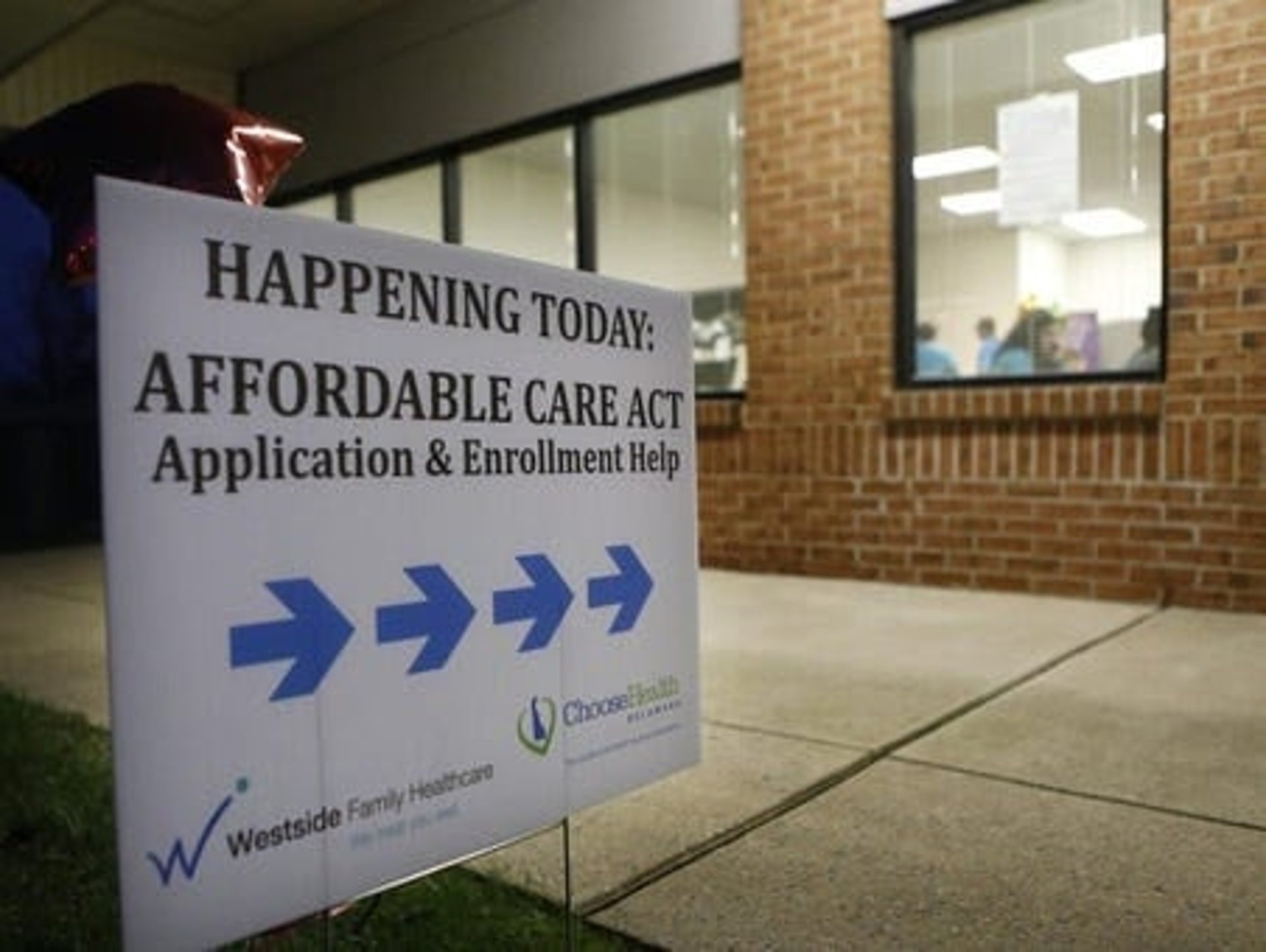

Millions of Americans may have decided to forgo health insurance this year after extra COVID-era federal subsidies expired, but those who live in certain places may be paying penalties for that choice.
While the federal government stopped penalizing Americans without health insurance in 2019, four states and Washington, DC still do. The penalties, usually paid when state tax returns are filed, are designed to encourage healthy people to buy insurance to help keep costs down for everyone.
These fines sometimes are called a “shared responsibility payment” on the idea it’s everyone’s responsibility to make health coverage available, affordable, and accessible – even if you can’t find affordable health care for yourself. The only ways to avoid the fines are to get an exemption or buy health insurance.
“The penalties can be pretty steep,” said Kiersten DeFluri, Medicare specialist at Daniel A. White & Associates.
Where Are There Individual Shared Responsibility Payments?
Americans in California, Massachusetts, New Jersey, Rhode Island, and Washington, DC still face penalties for not having health insurance.
How Much Are the Penalties?
The fines vary by jurisdiction, but they are generally either a flat fee per person or a percentage of income, whichever is higher, but capped at what the lowest level health plan would cost.
California: Californians who didn’t have coverage for themselves and their dependents for each month in 2025 and aren’t exempt will pay $950 per adult or more and $475 per dependent child, or 2.5% of their gross income over the filing threshold for their filing status. It’s whichever is higher, according to California’s Franchise Tax Board. The penalty for a married couple without coverage can be $1,900 or more, and the penalty for a family of four with two dependent children could be $2,850 or more, it said.
Massachusetts: Massachusetts levies income-based penalties, with caps based on the 2025 lowest-cost ConnectorCare plan or the lowest-cost individual bronze premium from the Affordable Care Act’s marketplace.
New Jersey: New Jersey charges an amount based on income and family size and is capped at the statewide average annual premium for bronze health plans in New Jersey. The minimum penalty for one adult is $695 up to a maximum $4,908 per month depending on income, according to the state’s website.
Rhode Island: Rhode Islanders who didn’t have insurance last year will pay a flat fee of $57.92 per month per adult and $28.96 per kid under 18 or 2.5% of modified adjusted gross income that exceeds the state’s filing threshold, whichever is more. The total amount can’t exceed the average monthly $357 cost of a bronze level health plan from the ACA exchange.
Washington, DC: Washington, DC taxes each adult $795 per month and $397.50 for each child, up to $2,385 per family or 2.5% of family income that is over the federal tax filing threshold, whichever is greater. Total payments are capped at the bronze plan premium rate.
Are the Penalties Still Less Than a Health Insurance Plan?
Since the penalties are supposed to discourage people from going without health insurance, they generally won’t save you much, if any, money, experts said.
Assume an adult in New Jersey would pay the flat monthly minimum penalty of $695, DeFluri said. Bronze plans in Jersey City, New Jersey can run between $350 and $1,400 per month, with “a good plan around $800 per month,” she said.
It may make sense to pay for at least catastrophic or bronze level health insurance or maybe add $100 more than what you would pay in a penalty for good insurance, she said.
Plus, the cost of “a doctor’s visit plus the penalty is probably more than very basic health insurance,” said Miklos Ringbauer, founder of MiklosCPA Inc. in Southern California.
How Can People Avoid Penalties?
To avoid penalties, people who live in these states and DC can see if they qualify for an exemption or buy a minimum health insurance plan to satisfy the requirement.
Exemptions generally include financial hardship, inability to afford insurance (when basic plan premiums exceed a set percentage of household income), short coverage gaps usually of three months or less or income below tax filing thresholds.
If you need to buy health insurance, Ringbauer said to check for state subsidies that can help lower insurance prices. More than 20 states have a state exchange that may help fill the gap left when additional federal subsidies expired.
“These states’ exchanges are strong enough right now” financially to offer subsidies this year, he said.
Medora Lee is a money, markets, and personal finance reporter at USA TODAY. You can reach her at [email protected] and subscribe to our free Daily Money newsletter for personal finance tips and business news every Monday through Friday.
This article originally appeared on USA TODAY: These 5 states still penalize you if you don’t have health insurance
Reporting by Medora Lee, USA TODAY / USA TODAY
USA TODAY Network via Reuters Connect
Read the full article here