




I’ve been aggressively buying the dip since March 2020, when I wrote How To Predict A Stock Market Bottom Like Nostradamus. My daughter was born four months earlier, and something inside me clicked, pushing me to invest aggressively for her future in an increasingly difficult world.
Since then, I’ve continued to buy virtually every meaningful dip (2%+) because I remain bullish on America, artificial intelligence, consumers’ insatiable appetite to spend instead of save, and economic policies designed to keep voters happy so politicians can stay in power.
At the same time, experience has taught me an important lesson: you can be right long term and still be wrong in the short term if you buy the dip too often and too early.
When Buying the Dip Becomes a Mindless Habit
While updating an older post from March 2022 about how your retirement withdrawal rate will decline during bear markets, I came across a graphic that jumped out at me. The image shows how frequently I was buying the dip during the first quarter of that year. It was fascinating and a little humbling.
2021 had been a phenomenal year +26%, after a +16% 2020 for the S&P 500. After two straight years of healthy gains, it felt unnatural for stocks to start correcting in 2022. It was as if investors had collectively forgotten that stocks sometimes go down.
As the market declined in early 2022, I began buying VTI repeatedly. February was particularly tough, both for the market and for my investing psyche. I kept buying, and the market kept falling. Looking back at the chart, I counted at least 14 separate dip purchases in just that one month.
The excitement of buying stocks at two to five percent discounts quickly faded when the S&P 500 went on to fall another 20+ percent from peak-to-trough! Buying the dip felt good emotionally, as if I was doing something about losing money, but the timing was far from ideal.
Ultimately, I should have spread out my dip buying in 2022 over a longer period of time. This is important context because as we start 2026, we’ve had three consecutive years of double digit gains in the S&P 500. And the same thing could happen again with so much nervousness around valuations and geopolitical uncertainty.
Don’t Buy Too Aggressively Too Soon
I’m fairly confident there will be another 10 percent plus correction in 2026. When that time comes, you want to have enough cash to take advantage of it. The problem is that meaningful corrections often take months to fully play out. If you deploy too much capital early, you may find yourself watching prices fall further without enough dry powder left.
In early 2022 alone, I bought the dip more than 35 times in the first quarter. Despite that, the market continued to decline. The lesson was clear: initial pullbacks are often just the beginning when valuations are elevated or when policy uncertainty is rising.
Once markets decide valuations are too expensive or that corporate profit expectations need to be reset, it can take several quarters of earnings reports for sentiment to shift.
Management teams need time to adjust guidance and strategies. That process does not happen overnight, which is why small three to five percent pullbacks should not be treated as once-in-a-cycle opportunities.
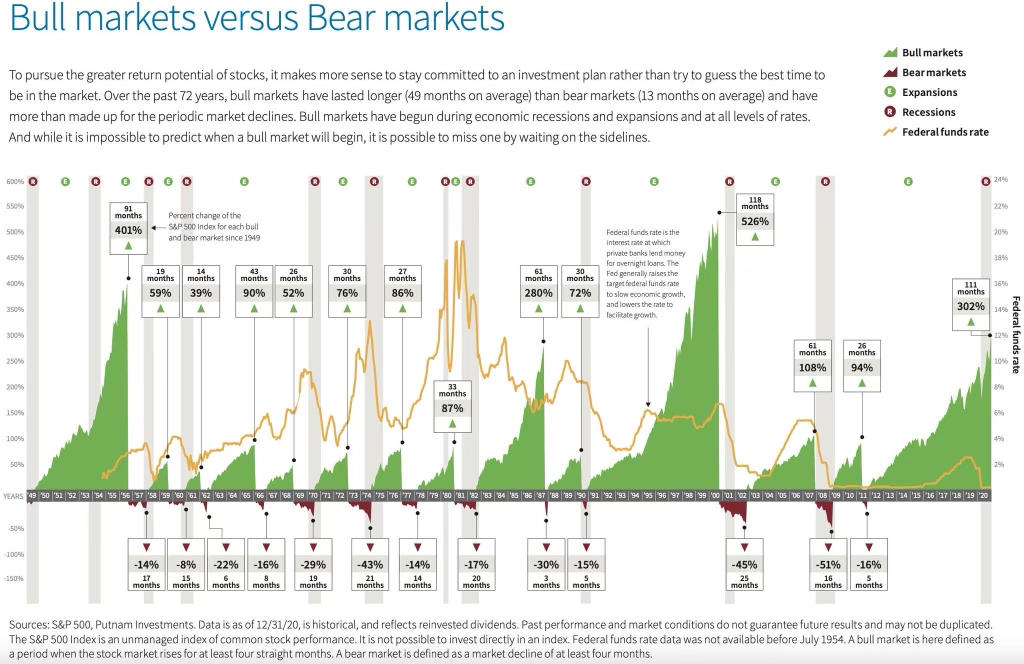
How Long Corrections and Bear Markets Usually Last
Historically, a typical 10 percent correction lasts about three to four months from peak to trough. Some resolve faster, while others stretch out longer depending on economic conditions and policy responses.
Bear markets, defined as declines of 20 percent or more, are more prolonged. On average, bear markets last roughly 9 to 14 months, although the range is wide. Some are short and violent, while others grind lower over multiple quarters.
This matters because buying too aggressively early in a downturn can leave investors underprepared for later, more attractive opportunities.
Thinking in quarters instead of days helps. Quarterly earnings are when real changes in sentiment, guidance, and strategy occur. In between, you are mostly reacting to noise.
Valuations Matter More Than Most Investors Admit
We just experienced three consecutive years of nearly 20 percent gains, making most stock investors substantially wealthier. Over a three year span, the market rose close to 80 percent. After a run like that, a meaningful correction should not be surprising.
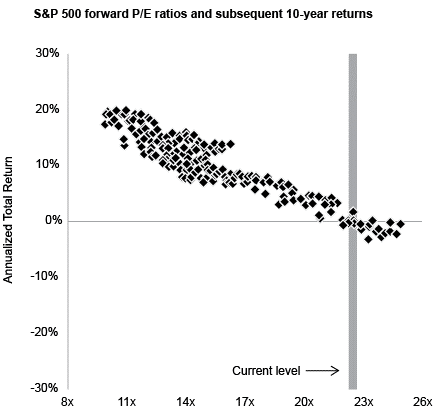
Today, the S&P 500 is still trading around 22.5 times forward earnings. Historically, when the forward price to earnings ratio has exceeded 23 times (or 30 times trailing), the subsequent 10 year annualized returns have ranged from roughly minus 2 percent to plus 2 percent per year. That is a far cry from the double digit returns many investors have come to expect.
If valuations were to revert toward a long term average closer to 18 times earnings, a 20 percent or greater correction would not be unreasonable. This is why valuation context matters when deciding how aggressively to buy dips.
The good news is that many of us were thinking this at the start of 2025, when the forward P/E was also around 22X. Yet we still enjoyed a double digit return as S&P 500 earnings grew by about 16.5 percent before dividends. The bad news is that the odds of another double digit return going forward are lower.
Make Sure You Have Ongoing Cash
Looking ahead, 2026 is a midterm election year. Historically, midterm years tend to experience higher volatility due to policy uncertainty. Now there’s heightened geopolitical uncertainty as well. Venezuela may not be the last country to get attacked.
Given this backdrop, investors should maintain at least 5% of their portfolio in cash, and possibly closer to 10%. With cash yields still north of four percent, the opportunity cost of holding cash is relatively low, especially compared to the flexibility it provides during market corrections.
Buying the dip has worked incredibly well over the past decade, especially during periods of aggressive monetary support and rapid technological progress. I remain optimistic about the long term trajectory of the U.S. economy and equity markets. However, optimism does not eliminate the need for discipline when valuations are stretched and markets have delivered years of outsized gains.
The key is not to stop buying the dip altogether, but to pace yourself. Corrections and bear markets tend to unfold over months, not days. By thinking in quarters, respecting valuations, and keeping enough cash on hand, you give yourself flexibility. Flexibility is what allows you to stay calm and opportunistic.
Build wealth steadily without running out of ammunition too early.
Reader Questions
- How much cash do you currently keep in your investment portfolio, and has that percentage changed as valuations have risen?
- Do you buy every dip automatically, or do you scale in based on valuation, time, or market sentiment?
- How do you think about buying dips for your children’s investment accounts during long bull markets?
Diversify Your Wealth Beyond Stocks and Bonds
One way to avoid buying the dip too early or too often is to broaden where you invest. Stocks and bonds are foundational, but when valuations are high and volatility rises, relying solely on equities can make timing mistakes costly.
That’s why I invest in real estate, which offers income potential and diversification without forcing you to react to every market pullback. Fundrise allows passive investment in residential and industrial properties across the Sunbelt, where valuations tend to be lower and rental yields higher.
Fundrise also provides exposure to private AI companies like OpenAI, Anthropic, Anduril, and Databricks, helping balance a portfolio without chasing short-term moves.
I’ve personally invested over $500,000 with Fundrise. With a $10 minimum, it’s an easy way to diversify while staying disciplined during volatile markets. Fundrise is a long-time sponsor as our investment philosophies are aligned.
Join over 60,000 readers and subscribe to my free Financial Samurai newsletter to stay informed and disciplined. Since 2009, I’ve shared insights to help readers grow wealth, gain freedom, and make smarter long-term financial decisions.
Read the full article here