

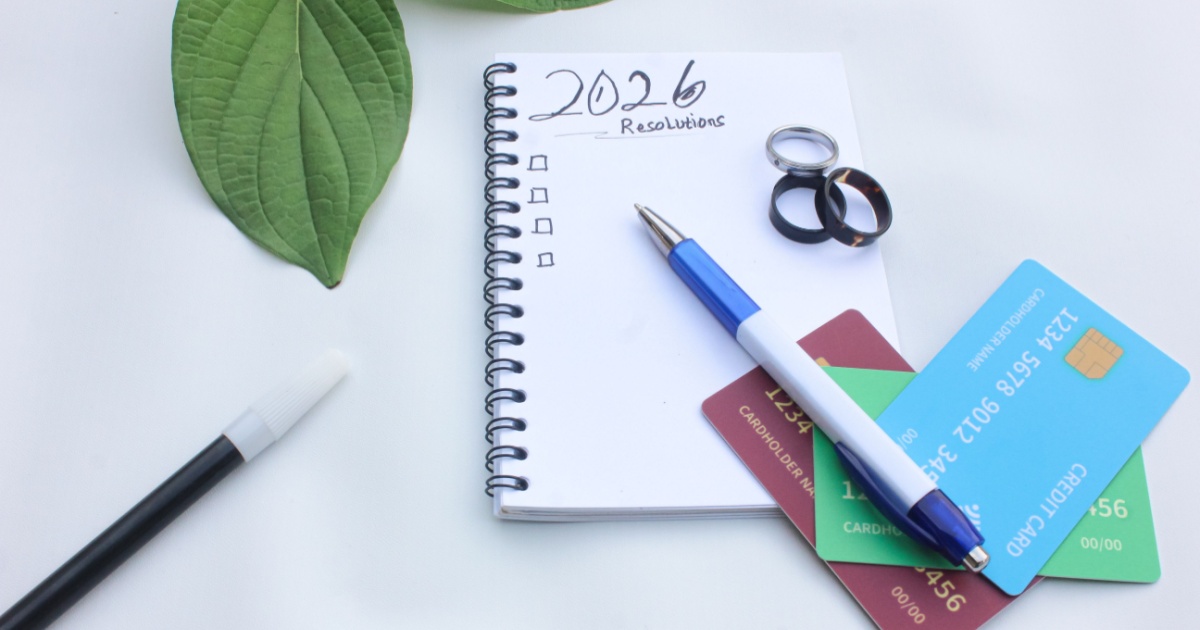

At the end of the year, many people pause to reflect on what worked and what didn’t, especially when it comes to their finances. Year end is a perfect moment to acknowledge challenges, review your habits and create a fresh plan for the year ahead. Even if 2025 wasn’t your most disciplined year, you can reset your budget and set yourself up for a stronger financial start for 2026!
If your goal is to be Debt-Free in 2026 then American Consumer Credit Counseling’s (ACCC) Financial Reset Guide is exactly where to begin.
Key Takeaways:
- Review your debt and interest rates before the end of 2025.
- Focus on paying down high-interest credit card balances first.
- Lower your interest rates by exploring nonprofit credit counseling or a Debt Management Plan.
- Create a realistic budget for 2026 based on your 2025 spending patterns.
- Use holiday bonuses, refunds, or cash gifts, to jump-start debt repayment or rebuild savings and emergency funds
- Avoid overspending on holiday gifts.
- If you use a BNPL offer for holiday spending, be sure to pay on time.
2026 Financial Reset Checklist: Understanding Your Debt, APRs & Payments
1. Review your current financial picture
If your goal is to truly reset your finances, you must have a clear picture of your current debt snapshot. You can’t fix what you don’t measure. Here are some tips on how to get started:
List out all credit cards with balances, APRs and minimum payments.
- Gather all credit card statements
- Keep track of late fees or penalty APRs for missed payments
Review your year-end statements by going online to each creditor to see your end of year interest totals. This could be a great motivator to pay off high interest debt!
- Identify highest interest cards
Use a worksheet in excel or google docs or use our online budgeting app CreditU.
- There are many good online budgeting tools available, but we are partial to ours.
2. Prioritize High-Interest Balances First
The higher the APR on your credit card the less of your monthly payment goes toward paying off the principal balance. If you make minimum payments only it will take years to pay off the debt and if you keep using the credit card, add on even more years!
How do you get ahead? There are several ways to try to pay down your debt on your own.
- The avalanche method
- The snowball method
- Hybrid Method
Which debt pay off method is right for you?
Strategy |
How It Works |
Best For |
Key Benefit |
|---|---|---|---|
| Avalanche Method | Pay off highest interest rate first; pay minimums on others. | People motivated by efficiency. | Saves the most money on interest. |
| Snowball Method | Pay off smallest balance first; pay minimums on others. | People who need quick wins for motivation. | Builds momentum fast. |
| Hybrid Method | Start with one small balance (quick win), then switch to high interest. | People who want a confidence boost but are financially savvy. | Balances psychology with savings. |
3. Lower Your Interest Rates Before January
If you find that you are ready to make a big impact on debt and reset your finances for 2026, you can enroll in a debt management plan that will lower your interest rates to single digits.
Here are the benefits of a debt management plan:
- Lower Rates
- Lower monthly payments
- No new loan or debt required
- Average Payoff time 3-5 years
- Consolidation with no new loan
When you work with ACCC, a certified credit counselor will assist you with budgeting by reviewing your assets and income information.
If you are eligible for a debt management plan, you can start right away. The best time to consider working with a nonprofit credit counselor is when you are still current but struggling to make the minimum payments.
Navigating Year-End Expenses & Holiday Debt
When you are out and about for holiday shopping trips this month make sure you have a list and a budget. According to data from the Federal Reserve, Q4 consistently shows the largest quarterly increase in credit card balances compared to other quarters.
Lending Tree’s Annual Holiday Debt Survey repeatedly shows the following:
- 36%–40% of Americans go into holiday debt
- Average holiday debt: $1,300 – $1,500
- Most of this debt comes from credit cards and Buy Now Pay Later (BNPL)
- BNPL usage surges in November and December by 25-35% according to an article by Forbes.com.
If you receive a bonus or gift money, use that money wisely. ACCC recommends that before anything else, make sure your essentials are covered. This includes rent or mortgage, utilities, groceries, medical or transportation costs. This prevents late fees, stress or falling behind even further.
The next best uses for unexpected income are:
- Build or rebuild an emergency fund
- Pay Down High Interest Credit Card Debt
- Put some toward a future fund for expenses you know will come up in 2026
Using your bonus or gift money with intention now can set you up for a stronger, less stressful financial start to 2026!
When to Ask for Professional Help
The tell-tale signs that your debt is becoming overwhelming aside from your rising stress level include:
- Minimum payments feel unmanageable
- If your APR is 20-30%
- Multiple cards are at their limit (maxed out)
Reach out at your convenience and a certified credit counselor will provide a confidential, free consultation and there will be no credit pull unless you decide to move forward.
A Fresh Financial Start for 2026
You deserve a fresh financial start, and it is possible to prepare now for a fresh start in 2026. By following the guidelines above you will be well on your way. If you find that you are struggling and can barely make minimum payments, or you have multiple cards at their limits, it may be time for a free consultation to learn more about nonprofit credit counseling. Leave your stress and debt anxiety in 2025.
Frequently Asked Questions
Q: What is the fastest way to start 2026 debt-free?
A: The fastest way to start 2026 debt-free is to get a clear picture of your current balances and interest rates, then focus on paying down high-interest credit card debt first.
Lowering your interest rates, consolidating your payments, or working with a nonprofit like ACCC can also accelerate progress. Many people save money and time by exploring options such as a Debt Management Plan, which can reduce high APRs and create one structured monthly payment.
Q: Does a Debt Management Plan hurt my credit score?
A: When you start a Debt Management Plan (DMP), you may experience an initial dip in your credit score because your credit card accounts will need to be closed. Closing accounts can affect your credit utilization and the average age of your credit history.
However, a DMP is not reported as a negative on your credit report, and over time many people see their credit improve. This is because you make consistent, monthly payments on time. Your balances go down steadily, and you avoid new late fees and penalty APRs.
For most people, the structure and stability of a DMP leads to healthier credit over the long term, even if there is a small drop at the beginning.
Q: How much can a DMP lower my interest rates?
A: Many creditors work with ACCC to reduce interest rates to single digits, depending on your specific situation.
Q: How do I know if nonprofit credit counseling is right for me?
A: Nonprofit credit counseling is a good fit if you’re struggling with credit card payments, paying high interest rates, or feeling overwhelmed by multiple due dates.
If you’re struggling to pay off debt, ACCC can help. Schedule a free credit counseling session with us today.
Read the full article here