


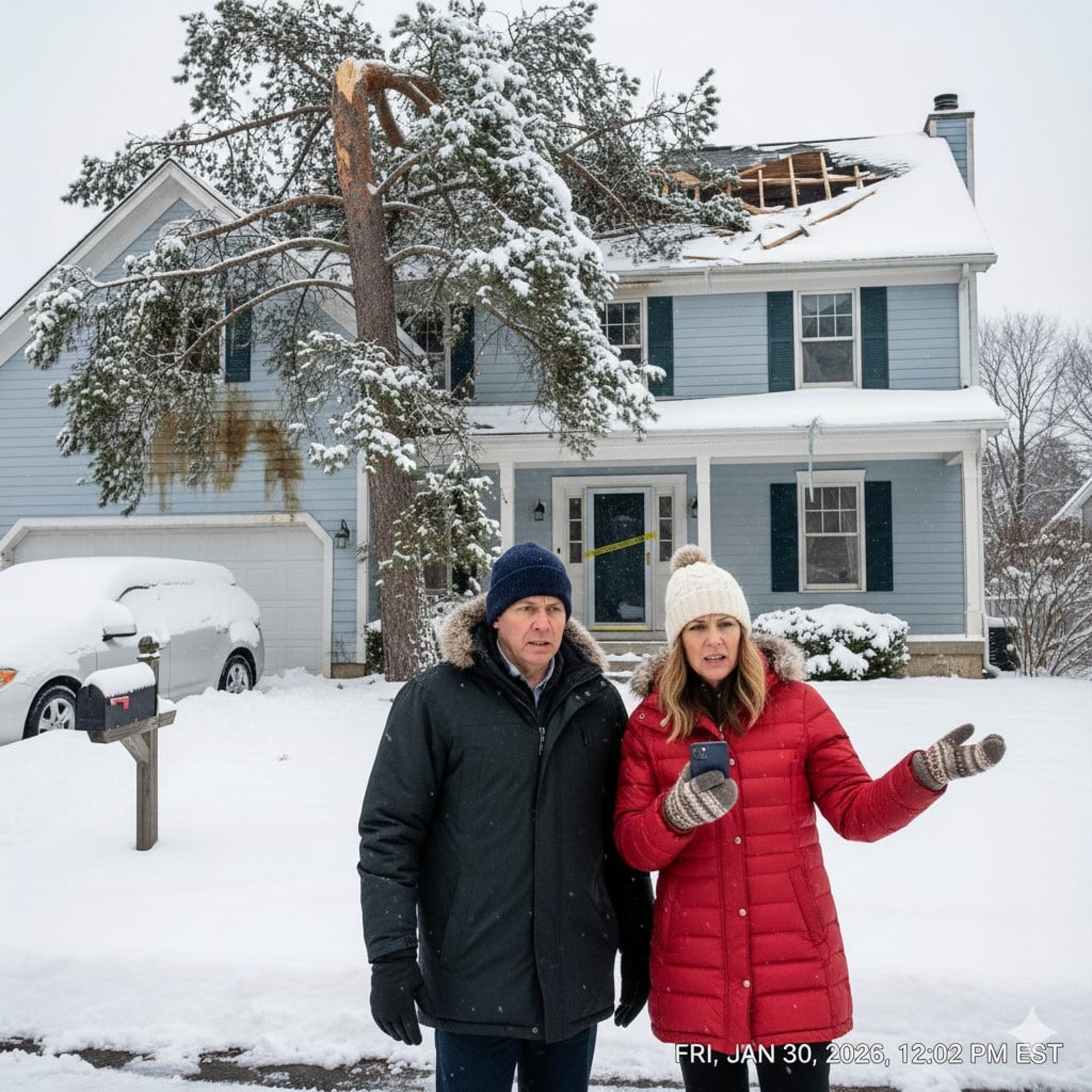

The sky is screaming, the mercury is diving, and your house is groaning under the weight of a “bomb cyclone.” While meteorologists love the dramatic terminology, there is nothing poetic about the sound of a pipe snapping in your basement or your roof buckling under a foot of frozen slush.
Once the wind stops howling, the real storm begins: the insurance claim. Most homeowners assume they are fully covered for anything Mother Nature throws their way. The reality is more nuanced, and if you aren’t careful, a “preventable” maintenance issue could leave you footing a five-figure bill alone.
Here is exactly what you can expect from your insurer when the ice thaws.
Frozen and burst pipes
When water freezes inside a pipe, it expands with enough force to split copper and plastic alike. The resulting mess can cause an average of over $11,000 in damage, according to industry data.
- The coverage: Standard policies typically cover the “sudden and accidental” discharge of water. This means if a pipe bursts unexpectedly, the insurance company will likely pay to dry out your home, replace ruined drywall, and fix your warped hardwood floors. As long as the water starts inside the home, you are generally on solid ground.
- The “heat” catch: This is where they get you. Most insurers require you to maintain “reasonable care” of the property. If you turned the heat off to save a few bucks while visiting family, or if you left a vacation home unheated, the claim can be denied for negligence. Most experts recommend keeping the thermostat set to at least 55 degrees Fahrenheit.
- The pipe itself: In a frustrating twist of insurance logic, many policies cover the damage caused by the water but will not pay for the actual pipe repair or the plumber’s labor to weld the break.
Roof collapses and snow weight
A cubic foot of fresh snow weighs about 20 pounds, but packed ice and “bomb cyclone” slush can weigh significantly more. If that weight causes your rafters to splinter, you are looking at a major structural claim.
- The coverage: Most standard homeowners policies cover roof collapse caused by the weight of snow, ice, or sleet. This includes damage to your personal belongings inside the house that get crushed or soaked during the cave-in.
- The maintenance trap: If an adjuster climbs up there and finds that your roof was already 30 years old, rotting, or had pre-existing damage, they may argue the snow was just the “last straw” for a failing structure. In that case, they might only pay a fraction of the cost or deny the claim entirely.
- Ice dams: These occur when heat escaping your attic melts snow on the roof, which then refreezes at the cold eaves, creating a literal dam. While the resulting water damage is usually covered, the cost to remove the ice dam itself is typically considered a maintenance expense—meaning it’s on you.
Flooding vs. water damage
This is the most common point of confusion—and the most expensive mistake you can make when talking to an adjuster.
- Ground water is the enemy: If the snow from a bomb cyclone melts rapidly and seeps through your foundation or flows under your front door, standard homeowners insurance will not cover it. That is classified as a “flood,” which requires a separate policy through the National Flood Insurance Program (NFIP).
- Watch your language: Never tell your insurer your basement is “flooded” if the water came from a burst pipe. Use the term “water damage.” Using the word “flood” can trigger an automatic denial before you’ve even finished the sentence.
Food spoilage and power outages
If the storm knocks out the grid, the contents of your freezer are at risk.
- The $500 limit: Many policies offer up to $500 for food spoilage if the outage was caused by a covered peril (like a tree falling on a power line).
- The deductible dilemma: Before you file a claim for $300 worth of steaks, check your deductible. If your deductible is $1,000, you won’t get a dime, and you’ll have a claim on your record that could raise your premiums later.
Beware of “storm chasers”
After the wind dies down, the scammers come out. Be wary of contractors who show up at your door uninvited offering “free” roof inspections or promising to handle your insurance claim for you. These winter storm scams can leave you with a lien on your house or a half-finished repair. Always call your insurance company first and use their list of preferred, licensed contractors.
Read the full article here